General Questions
- How can I get a quote or schedule a service appointment?
You can request a free on-site evaluation or quote through Roark’s website or call (941) 924-3016 to speak directly with a specialist. - Does Roark service systems installed by other companies?
Yes. Roark frequently services, repairs, and upgrades systems originally installed by other contractors. - Do Roark installations come with warranty or service support?
Yes. All installations include parts and labor warranty coverage, with optional maintenance and service plans for ongoing support. - How do I know which system is right for my property?
Roark’s specialists evaluate your goals, site layout, and existing equipment to recommend the most efficient and cost-effective solution for your home or business. - Who owns Roark Solar today?
Roark Solar is owned and operated by Clayton Cowell, a licensed roofer, builder, and solar professional, along with his wife Anne Cowell, Jim Roark’s stepdaughter. Together they continue the family legacy established in 1978 while expanding the company’s technical capabilities and service network. - Is Roark Solar still family-run?
Yes. Roark Solar remains a second-generation, family-owned business headquartered in Sarasota. Every customer still works directly with the Cowell family and their long-tenured local team — not an out-of-state franchise or corporate call center. - How is a roofer-owned solar company different?
Most solar installers focus solely on panel placement and electrical output. As a roofer-owned company, Roark Solar designs each system around your roof’s structure, materials, and drainage to ensure watertight protection and long-term performance. - Does Roark Solar still install Aquatherm systems?
Absolutely. Roark Solar is Florida’s longest-running Aquatherm Industries dealer, supplying and installing America’s #1 solar pool-heating systems since 1978. - What types of systems do you service?
Our technicians are factory-trained to maintain and repair nearly all major brands, including Aquatherm, Heliocol, SunStar, Hi-Tec, iSwim, Nuvis, Enphase, SolarEdge, and Fronius. Whether your system was installed by Roark or another provider, we can service it. - Which areas do you serve?
Roark Solar proudly serves homeowners throughout Sarasota, Manatee, and Charlotte counties, with installations and maintenance programs available year-round. - How long has Roark Solar been in business?
Roark Solar has been serving Florida’s Suncoast since 1978 — nearly five decades of continuous, locally owned operation. - How can I learn more about your services?
Visit our Services pages to explore detailed information about solar pool heating, hybrid systems, and residential solar electric solutions.
Solar Panel Removal & Reinstallation
- Do solar panels need to be removed when my house is re-roofed?
Yes. To properly replace your roof’s underlayment and flashing, all solar panels must be removed before reroofing begins. Leaving panels in place prevents full waterproofing and can void roofing warranties. Roark coordinates directly with your roofer to remove, protect, and reinstall your system—ensuring your new roof and solar array are both secure and watertight. - Can you improve my system during reinstallation?
Yes. If the original system used substandard mounts or flashings, Roark offers upgrades to bring it to proper standards. - What types of solar systems do you remove and reinstall?
All types: solar pool heating, solar electric (PV), and solar hot water. - Do you offer removal without reinstallation?
Yes—Roark can professionally remove your solar system and place all panels and components in a homeowner-designated location on your property (such as a garage, lanai, or under an eave) until you’re ready to reinstall or relocate the system. Roark does not transport or store solar equipment off-site. - Can Roark reinstall my system if another company originally installed it?
Yes. Roark frequently handles removal and reinstallation for systems installed by other contractors. During the process, we assess mount quality, plumbing, and wiring to ensure compliance with current codes. - How long does the removal and reinstallation process take?
Timing depends on roof size, system type, and weather conditions. In most cases, removal occurs one day before roofing begins, and reinstallation is completed immediately after the roof is finished. - Do you handle tile roofs differently than shingle or metal roofs?
Yes. For tile roofs, Roark installs new solar mounts after the roof is dried in but before tiles are set, allowing the roofer to flash around each mount for complete waterproofing. This prevents broken tiles and ensures watertight integrity. - What should I do to prepare for solar panel removal?
Before removal, please ensure roof access is clear and that a safe, homeowner-designated area on your property is available for temporary staging of the panels and components. Depending on the system type, this may include a garage (commonly for solar electric or solar hot water systems) or a protected area such as a pool cage or under an eave for solar pool heating. Roark will handle system shutdown, careful removal, and placement of all equipment in the designated on-property location. - Why do solar panels need to be removed for reroofing?
Because roofers can’t properly replace underlayment or shingles beneath solar arrays. Removing the system ensures full roof coverage and watertight integrity. - Do you work with my roofing company?
Absolutely. Roark coordinates directly with your roofer to ensure proper scheduling, dry-in timing, and mount installation. - Does Roark handle both removal and reinstallation?
Yes. Roark manages the complete process, including system disconnection, coordination with your roofer, and reinstallation once the new roof is complete. During reroofing, panels are placed in a safe, homeowner-designated location on the property—such as a garage, lanai, or under an eave—and are not stored off-site. - Can you improve my system during reinstallation?
Yes. Depending on your system’s condition, Roark can recommend and perform upgrades during reinstallation. This may include upgrading solar pool or hot water panels and tanks, replacing warranty-covered components, or updating solar electric systems with modern inverters, microinverters, or optimizers when appropriate. All upgrades are evaluated case by case to ensure compatibility and long-term performance. - What types of solar systems do you service?
All types: solar pool heating, solar electric (PV), and solar hot water. - Do you offer removal without reinstallation?
Yes—We also offer removal and disposal if needed.
Solar Hot Water
- How does a solar hot water system work?
A roof-mounted solar collector captures sunlight and transfers heat to a storage tank using a closed-loop fluid system. When sunlight is limited, a built-in electric backup element keeps your water hot—so you’ll never run out. - How long does a solar hot water system last?
With professional installation and quality components, systems can last 20 years or more, far exceeding the lifespan of most conventional water heaters. - How long does it take for a solar hot water system to pay for itself?
Typical payback periods range from four to seven years, depending on household usage, utility rates, and available incentives. After that, the energy savings go straight to your pocket while the system continues to deliver free hot water for 15–20 years or more. - Which solar hot water brands does Roark install?
Roark installs certified SunEarth and American Water Heater solar systems, including Empire Series collectors and SE Series storage tanks—both known for efficiency, durability, and long-term reliability. - What size solar storage tank do I need?
Tank size depends on household hot-water demand. Roark typically installs 65-, 80-, or 119-gallon tanks, ensuring enough capacity for your family’s daily use without wasted energy. - Does Roark offer ongoing maintenance or service?
Yes. Roark provides system inspections, preventive maintenance, and support services to keep your system operating efficiently for decades. - Do solar hot water systems help the environment?
Yes. A single system can offset several tons of CO₂ emissions over its lifetime, helping reduce your household’s carbon footprint while saving money on utilities. - Will I still have hot water on cloudy days?
Yes. The system is designed with a backup heating element that automatically activates when sunlight isn’t sufficient, ensuring reliable hot water every day of the year. - How much can I save on my energy bill?
Most Florida homeowners reduce their water-heating costs by 50–80%, depending on system size and household water use. - Can it work with my existing water heater?
No. Solar collectors must be attached to a solar-specific hot water tank—and solar-specific tanks must be paired with compatible solar collectors. Some older systems use standard electric tanks that have been “rigged” to function with solar components, which is not a practice we install. We can service these legacy setups, but we do not retrofit or “rig” new systems. - What kind of maintenance is required?
Very little. Aside from occasional inspections, solar hot water systems typically require minimal upkeep. Roark offers maintenance and service plans for long-term peace of mind. - Is solar hot water a good fit for Florida homes?
Absolutely. Florida’s abundant sunshine and warm climate make it one of the best regions in the country for solar water heating. - Can a solar hot water system be installed on any roof?
In most cases, yes. Solar collectors can be securely mounted on nearly any roof type—including shingle, tile, and metal. As a roofer-owned company, Roark ensures every installation is properly flashed, sealed, and supported to protect your roof and maintain its integrity.
Solar Electric Service & Maintenance
- What are the signs my solar system needs maintenance?
Common indicators include lower-than-normal power production, inverter warning lights, unusual noises from equipment, or visible damage on the roof or panels. If something seems off, it’s best to have a technician check it promptly. - How long does a typical service visit take?
Most inspections and cleanings take between one and three hours, depending on system size and accessibility. We’ll provide a detailed report after each visit so you know exactly what was checked and what, if anything, needs attention. - What does a solar electric inspection include?
A full inspection covers panel condition, inverter diagnostics, wiring integrity, mounting hardware, roof flashing, and system performance data. We also test for shading or debris issues that may affect output. - Do you offer emergency service after hurricanes or severe weather?
Yes. Roark provides storm-damage assessments and emergency response to inspect and repair solar systems impacted by hurricanes, hail, or high winds. - Can regular maintenance improve system performance?
Yes. Cleaning panels, tightening electrical connections, and updating monitoring settings can help recover lost efficiency and improve overall power output. - Do you check roof integrity during service?
Absolutely. Because Roark’s ownership has a history in roofing, we always inspect mounts and roof penetrations to ensure your system remains watertight and structurally sound. - Does Roark offer new solar home PV installations?
Roark does not install new whole-home solar electric (PV) systems. Our focus is on expert service, maintenance, inspection, and reinstallation of existing PV systems—whether they were originally installed by Roark or another company. We specialize in keeping your current solar investment operating safely and efficiently through professional cleaning, diagnostics, storm assessments, and system restoration. - How often should I have my solar electric system serviced?
We recommend a professional inspection and cleaning at least once per year. Florida’s humidity, salt air, and debris can build up faster than most homeowners expect. Annual service helps maintain output and protect warranty coverage. - Do solar panels need to be cleaned regularly?
Yes. Even small amounts of dirt, pollen, or bird droppings can reduce efficiency. Regular cleaning keeps your panels operating at full production and can extend their lifespan. - Can Roark inspect my system after a storm?
Absolutely. We provide post-storm inspections to identify damage to panels, wiring, or mounting systems. Our technicians also verify that your roof remains watertight and structurally sound. - What if my solar inverter shows a fault or error code?
That’s a sign your system needs professional attention. Roark can diagnose inverter and wiring issues, replace failed components, and get your system producing again safely. - Do you service systems installed by other companies?
Yes. Whether Roark installed your system or not, we can inspect, maintain, and repair most major brands of panels and inverters.
Solar Pool Heating
- What happens on cloudy or rainy days?
Your solar controller automatically pauses water circulation when sunlight isn’t strong enough for heating. As soon as the sun returns, the system resumes operation and continues warming your pool. - Can I control the temperature of my pool?
Yes. A solar controller or your pool’s existing automation system allows you to set your preferred temperature. The system circulates water only when heating is needed, maintaining a consistent, comfortable temperature automatically. - Can solar pool heating be added to an existing pool or older roof?
Yes. Solar pool heating can be added to almost any existing pool. Roark Solar evaluates roof condition and material before installation and can make minor repairs or reinforcements if needed for a secure, long-lasting mount. - Are Aquatherm solar panels made in the USA?
Yes. All Aquatherm panels — including EcoSun® and Sun-Swim XT® — are manufactured in Lakewood, New Jersey, under an ISO 9001:2015 certified quality-management system.
Each collector is individually inspected to ensure lasting performance and reliability. - Are the solar collectors certified or tested for performance?
Yes. Aquatherm panels carry multiple national certifications, including: Florida Solar Energy Center (FSEC) performance certification, NSF/ANSI 50 for commercial aquatic safety and durability, SRCC 100-2020 and ICC 901 solar rating certifications. - What’s the difference between EcoSun® and Sun-Swim XT® panels?
Both are Aquatherm solar pool heating panels made in the USA, but each is optimized for different applications. EcoSun® features a vented tube-and-web design that provides excellent heating performance, flexibility, and wind relief — ideal for shingle and tile roofs. Sun-Swim XT® is a more rigid collector with micro-vents and thermal expansion joints for high wind resistance and durability, perfect for metal or high-exposure roofs. Both come with a 12-year manufacturer warranty plus 2-year labor/workmanship coverage when installed by Roark Solar. - What kind of warranty coverage is included?
All Aquatherm panels include a 12-year manufacturer warranty plus Roark Solar’s 2-year labor and workmanship warranty — providing complete protection against product defects and installation issues. - How much does solar pool heating cost to operate?
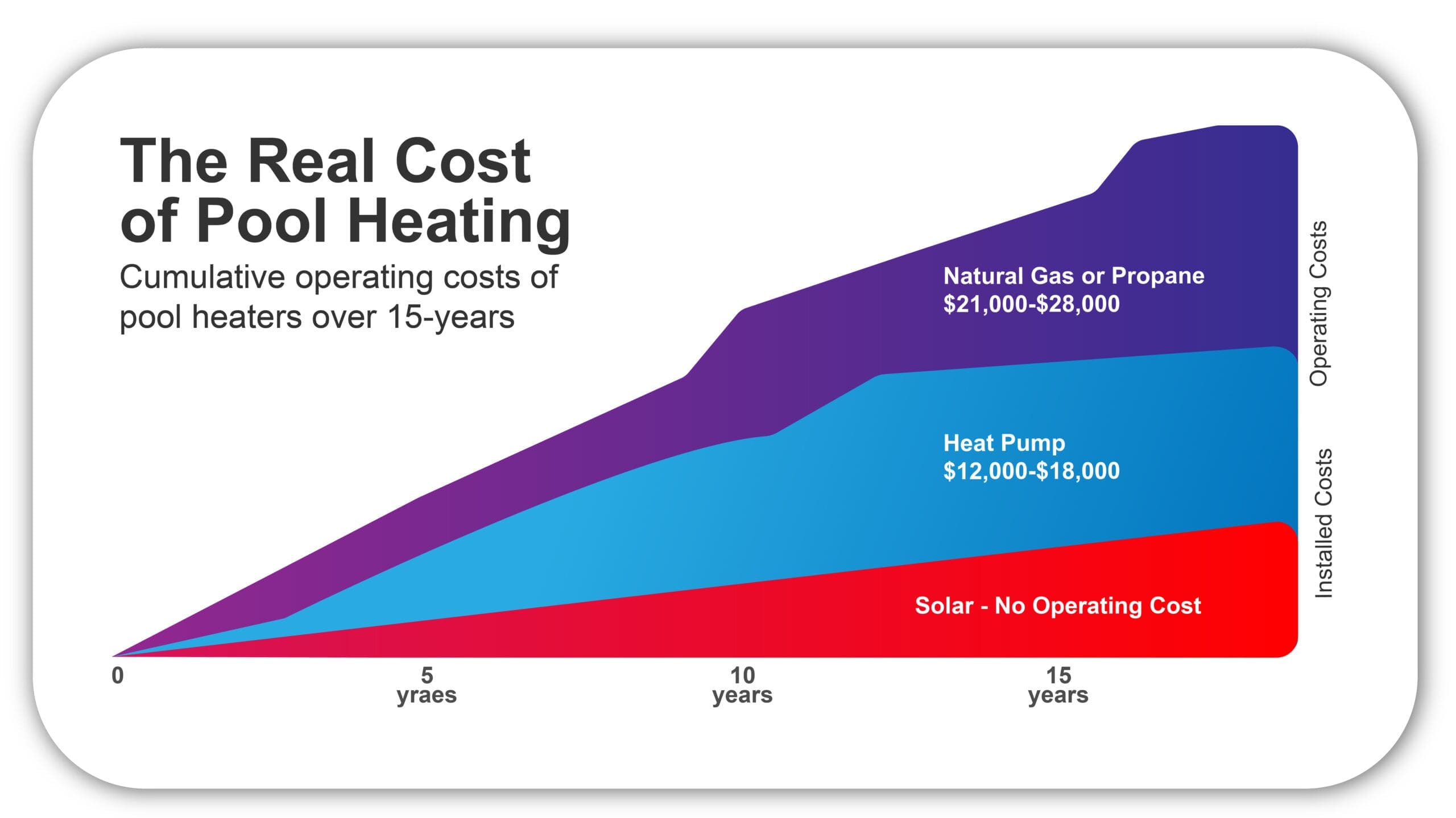
Almost nothing. Once installed, the system uses the sun’s free energy to warm your pool. The only electricity used is what your pool pump already requires for daily filtration.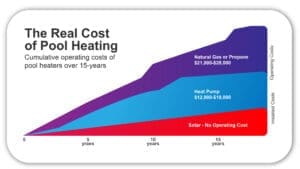
-
How efficient are Aquatherm panels?
Aquatherm solar pool heaters are among the most efficient available, with certified performance ratings around 93% under Florida Solar Energy Center testing.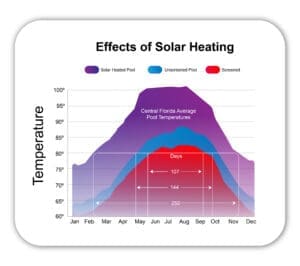
-
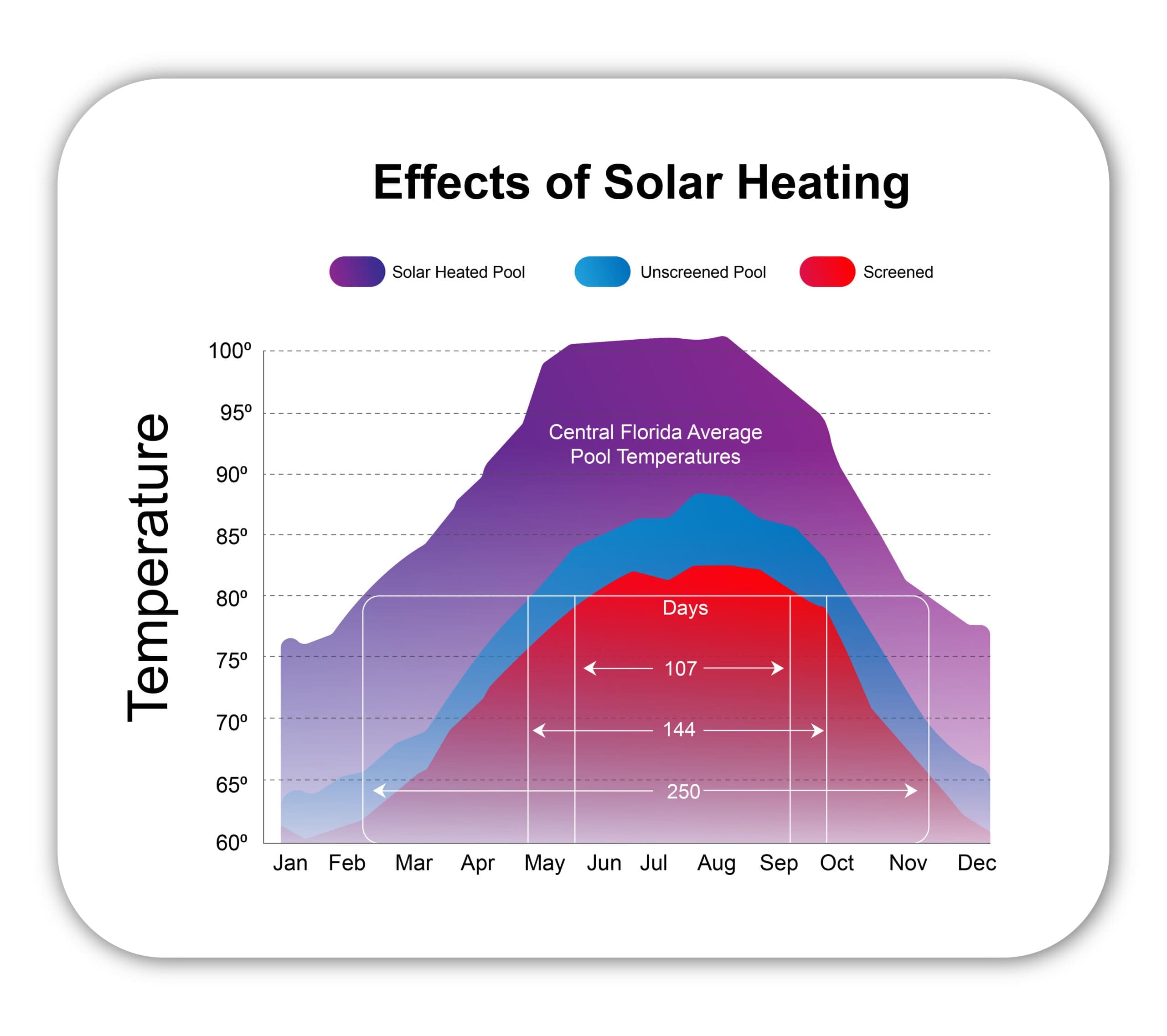
Can I use solar pool heating year-round in Florida?
Yes. In most of Florida, solar pool heating provides comfortable swimming temperatures for 9–10 months per year. During the coldest weeks, it can operate alongside an auxiliary heater if desired. -
Do the panels add much weight to the roof?
No. Solar pool heating panels are lightweight — typically adding less than 3 pounds per square foot when filled with water, well within standard roofing load limits. -
Can solar pool heating help reduce my energy bills?
Yes. By using free solar heat instead of gas or electricity, most homeowners see their pool heating costs drop by 80–100%, with systems often paying for themselves within a few years. -
What if I need repairs or replacement parts later?
Roark Solar services and repairs all major solar pool heating brands — including Aquatherm, FAFCO, Heliocol, Hi-Tec, Magen, Solar Industries, and UltraSwim. We stock replacement parts and can match or upgrade your existing system if needed. -
Do solar pool heating systems make noise when operating?
No. They operate silently, relying only on your existing pool pump to circulate water. There are no fans, motors, or moving parts in the collectors themselves. -
Can solar pool heating panels be removed for roof work?
Yes. Panels can be temporarily removed and reinstalled during roof replacement or repair. Roark Solar provides full removal and reinstallation services for both our systems and other brands. -
How much roof space is needed?
A typical system requires 50–75% of your pool’s surface area in collector space, depending on desired temperature and usage. Our team designs each layout for maximum efficiency using available roof space. -
Can I get solar pool heating if my pool is shaded part of the day?
Yes. We can design systems to take advantage of your best available sunlight — often placing panels on multiple roof faces or supplementing with a hybrid setup for consistent heating. - How does solar pool heating actually work?
Your pool water is circulated through roof-mounted solar collectors, where it’s warmed by the sun before returning to your pool. A controller or automation system opens a valve when heat is needed and closes it once the desired temperature is reached — using free solar energy to maintain comfortable water temperatures automatically. - How long does installation take?
Most residential installations are completed within one day, depending on roof type and plumbing layout. Because Roark Solar’s technicians are roofing specialists as well as solar installers, each system is mounted securely and watertight, with minimal disruption to your property. - Can solar pool heating work with my existing heater?
Yes. Solar systems integrate seamlessly with gas or electric heaters in a hybrid configuration. The solar collectors pre-heat your pool water first, dramatically reducing how often your fossil-fuel heater runs — saving both energy and money. - Will solar pool heating work with my existing pool pump?
The answer is maybe. This all depends on multiple factors. Head lift (high how is the roof?) is it an oversized system? Is it an exisiting single speed pump? (not recommended for solar). Variable speed pumps are optimal. - How long do solar pool heating systems last?
With proper installation and maintenance, Aquatherm solar pool heating panels typically last 15–20 years or more. Their UV-stabilized materials and vented design minimize wear, and Roark Solar’s workmanship warranty provides added peace of mind for long-term performance. - What kind of maintenance do solar pool heating systems need?
MOST systems are self draining but not all. This all depends on how the pipe has to run. Non self draining systems are ok since we dont have to worry about freezing temperatures here in Florida mostly. Large installs on tall multi-faceted roofs may require the installation of a seperate drain or more.
Hybrid Pool Heating Systems
- Do I need to replace my existing solar or gas system to go hybrid?
Not always. Many pools can be upgraded with minor plumbing or controller modifications to combine existing equipment into a hybrid configuration. - Is a pool cover required?
Strongly recommended. It significantly reduces nighttime heat loss and operating cost. - What if my backup heater is old?
Our technicians can integrate or replace it with a high-efficiency model for seamless hybrid operation. - What kind of maintenance does a hybrid system need?
Solar panels require light cleaning and periodic inspection. Electric and gas heaters should be serviced annually to maintain peak performance. - Can an existing solar pool system be converted into a hybrid system?
Yes. Roark specializes in retrofitting existing solar or gas systems into high-efficiency hybrid configurations. We ensure both systems work together harmoniously through upgraded plumbing, smart controls, and balanced energy distribution. - What types of backup heaters can be used in a hybrid setup?
Hybrid systems can pair solar collectors with either electric heat pumps or gas heaters, depending on your property’s setup and heating preferences. Both options integrate with smart controls for automated temperature regulation. - Does Roark install automation and smart controls?
Yes. Roark installs and calibrates leading automation systems—including Hayward GL235, OmniLogic, and Pentair IntelliCenter—for automatic source switching, remote monitoring, and precise temperature control. - Are hybrid pool heating systems energy efficient?
Extremely. By using solar as the primary heat source and auxiliary power only as needed, hybrid systems can cut heating costs by 60–80% compared to standalone electric or gas systems. - How long do hybrid systems last?
When professionally installed and maintained, a hybrid pool heating system typically lasts 15–20 years, with solar panels often lasting longer. - Can Roark service both parts of a hybrid system?
Yes. As licensed Pool, Solar, and Gas contractors, Roark’s technicians service all major brands of solar panels, heat pumps, and gas heaters, including Aquatherm, Hayward, Pentair, and Raypak. - Is a hybrid pool system environmentally friendly?
Yes. Solar provides most of the heat using free, renewable energy, while the backup heater operates only when needed. This reduces fuel consumption and lowers your carbon footprint. - Do I need to replace my existing solar or gas system to go hybrid?
Not always. Many pools can be upgraded with minor plumbing or controller modifications to combine existing equipment into a hybrid configuration. - Will a hybrid system cost more to operate?
No. In most cases, solar provides 70–90% of heating needs. The backup heater runs only occasionally—minimizing energy costs. - Is a pool cover required?
Strongly recommended. It significantly reduces nighttime heat loss and operating cost. - What if my backup heater is old?
Our technicians can integrate or replace it with a high-efficiency model for seamless hybrid operation. - Can an existing solar pool system be converted into a hybrid system?
Yes. Roark specializes in retrofitting existing solar systems with electric, inverter, or gas. We ensure both systems work together harmoniously through upgraded plumbing, smart controls, and balanced energy distribution.
Pool Heat Pumps & Gas Heaters
- Can Roark install both heat pumps and gas heaters?
Absolutely. Roark designs, installs, and services both electric and gas pool heating systems, selecting the right model and size for your pool’s volume, location, and usage needs. - Do you offer maintenance and repairs for existing systems?
Yes. Roark provides full maintenance, diagnostics, and repair services for all leading brands. Our technicians perform manufacturer-recommended service to protect performance and warranty coverage. - What kind of maintenance does a pool heater need?
Both systems benefit from annual inspections. Heat pumps require coil cleaning, refrigerant checks, and electrical testing, while gas heaters need burner cleaning, vent inspection, and verification of gas-line integrity. - Can Roark upgrade or replace my old pool heater?
Yes. Roark can replace outdated systems with high-efficiency electric or gas models, or retrofit your existing setup into a solar hybrid configuration for year-round comfort and lower operating costs. - Do heat pumps work in cold weather?
Yes, but efficiency decreases in colder temperatures. Even so, modern inverter models can still provide consistent warmth during Florida’s cooler months. For faster recovery on cold or cloudy days, a hybrid or gas-assisted setup is recommended. - Which is better for me — a heat pump or gas?
It depends on how often you use your pool. Heat pumps are ideal for steady, energy-efficient heating throughout Sarasota’s mild seasons, while gas heaters provide faster heat for spas or pools used intermittently. Many homeowners choose solar-assisted hybrids for the best balance of cost and performance. - How long do pool heat pumps last?
Most quality heat pumps last 10 to 15 years when properly maintained. Routine service — such as coil cleaning and electrical inspections — helps ensure full lifespan and top efficiency. - Are inverter heat pumps worth the extra cost?
Yes. Inverter-driven models use variable-speed compressors that automatically adjust output, maintaining consistent water temperature while lowering energy use and operating noise. Over time, the energy savings can offset the higher initial price. - Can I use both systems together?
Yes — hybrid systems combine solar with either a gas or electric heater to maintain perfect water temperature year-round. The solar system handles most of the heating, and the secondary heater activates only when needed. - What’s the average heating cost per month?
Operating costs vary based on weather, pool size, and how often the system runs. In Sarasota’s climate, standard heat pumps typically add $50–$150 per month. Inverter heat pumps are usually the most affordable option to operate, thanks to variable-speed technology that reduces energy use while maintaining temperature more efficiently. Gas heaters cost more to run but deliver rapid heating when needed. - How loud are heat pumps?
Modern inverter heat pumps are very quiet, often no louder than a conversation. Traditional units may hum slightly during operation, but proper placement and professional installation minimize sound.
Pool Equipment & Automation
- Will pool automation work with my existing equipment?
Often yes. Hayward Omni® and Pentair IntelliCenter® can integrate with many existing pumps, heaters, lights, and salt systems. Roark assesses your equipment for compatibility and designs the control layout so everything works reliably from a single app. - Are salt systems really “chlorine-free”?
No—they generate chlorine from dissolved salt. The advantage is steadier sanitation with water that feels gentler on skin and eyes, plus fewer harsh chemical odors and lower routine chemical handling. - How loud are variable-speed pumps?
They’re significantly quieter than single-speed pumps, especially at lower RPMs. Proper sizing and professional configuration further minimize sound during normal operation. - How do I choose the right pump, filter, or control system for my pool?
Roark evaluates your pool volume, plumbing layout, usage habits, and any solar/heater integrations, then specifies equipment (and settings) for efficient flow, clean water, and seamless automation—built to perform in Florida’s climate. - What is a Variable-Speed Pump for a pool and how does it differ from a regular pump?
A variable-speed pump uses a permanent magnet motor that allows precise control of water flow. Unlike single-speed pumps that run at one fixed RPM, variable-speed units automatically adjust speed to meet filtration or heating demands. The result is quieter operation, better circulation, and up to 80–90% energy savings. These pumps are also required for solar pool heating systems in Florida due to efficiency standards. - What is a pool Salt System?
A salt system, or salt chlorine generator, converts dissolved salt in pool water into chlorine through electrolysis. This process maintains steady sanitation without harsh chemicals, leaving the water softer on skin and eyes. Systems like the Hayward AquaRite® S3 or MadiMack InverChlor continuously monitor salt levels and chlorine output, providing automated, low-maintenance water care integrated with modern pool automation systems. - What is a pool Filtration System?
A filtration system removes dirt, oils, and microscopic debris to keep water clear and safe. Roark installs Hayward SwimClear™ and Pentair Clean & Clear® RP cartridge filters, which capture fine particles without the need for messy backwashing. Properly sized filtration systems reduce pump workload, conserve energy, and help extend the life of other pool equipment. - What’s the difference between pool automation and a solar thermostat?
Pool automation systems—like Hayward Omni® or Pentair IntelliCenter®—control virtually every aspect of the pool, from lighting and heating to filtration and water features, through an app or voice command. A solar thermostat, such as the Hayward GL235, is a simplified controller designed only for solar heating. It automatically adjusts water flow to maintain temperature but doesn’t manage other pool features. - Are variable-speed pumps required for solar systems?
Yes. Variable-speed pumps are required by Florida energy regulations and are essential for solar pool heating. Their ability to maintain consistent flow rates at varying speeds ensures proper heating efficiency while keeping electrical costs low. Roark configures each pump to match your solar collector’s flow requirements for optimal performance and protection of the system. - Can I upgrade existing equipment to automation?
In most cases, yes. Modern systems like Hayward OmniPL Retrofit Kits allow older equipment—pumps, heaters, and salt systems—to integrate with app-based automation and smart-home controls. Roark’s technicians evaluate your current setup to determine compatibility and recommend upgrades that provide full control without replacing working equipment. - Which brands do you install and service?
Roark installs Hayward, Pentair, and MadiMack systems, with Totally Hayward® certified installations qualifying for extended warranty coverage. We also service most other major brands, including AquaCal, Raypak, and others, providing full maintenance and repair support even for systems we didn’t install. - How much energy can variable-speed pumps save?
Depending on pool size and usage, variable-speed pumps can reduce energy consumption by 70–90% compared to single-speed models. Their ability to run at lower RPMs for filtration and circulation drastically lowers power draw. Many Roark customers see their investment pay for itself within two years through reduced electric bills alone.
Roark Smart Yard
- What is Smart Yard by Roark?
Smart Yard by Roark is a custom outdoor automation system that integrates pool, lighting, misting, irrigation, and other compatible equipment into one app-based interface. It allows you to control and monitor your outdoor environment from anywhere, all managed by Roark’s licensed Sarasota-based technicians. - Can Smart Yard integrate my existing pool, lighting, or irrigation equipment?
Yes. Roark evaluates your current systems to determine compatibility and can often integrate existing equipment into the Smart Yard network, minimizing the need for replacements while unifying control through one app. - Does Smart Yard work with existing smart home devices?
In many cases, yes. Smart Yard can be configured to work alongside compatible devices and platforms. During your consultation, Roark’s technicians will review your setup and confirm which devices can be connected. - Can I automate schedules or scenes with Smart Yard?
Absolutely. You can create custom schedules and lighting or climate scenes — such as turning on pathway lights at sunset, misting before a gathering, or heating the spa ahead of time — all within the Smart Yard app. - What happens during the on-site evaluation?
Roark’s team inspects your pool, lighting, irrigation, and other systems to identify which components can be connected to Smart Yard. They’ll recommend any necessary upgrades or additional hardware to achieve full integration. - Is Smart Yard compatible with Roark’s misting and fogging systems?
Yes. Smart Yard directly connects to Roark’s professional misting and fogging systems, allowing you to automate operation by schedule, control individual zones, and adjust comfort settings remotely. - What kind of app or interface is used to control Smart Yard?
Smart Yard is managed through a secure mobile app, custom-configured for your property. Roark sets up your dashboard, programs automation rules, and trains you to confidently manage all connected systems. - Can I monitor and adjust my pool or spa temperature remotely?
Yes. With Smart Yard, you can adjust your pool and spa’s temperature, lighting, and filtration directly from your phone or tablet — ideal for preheating before guests arrive or maintaining conditions while away. - What if my outdoor systems are older or from different brands?
Roark specializes in compatibility testing and can often integrate legacy or mixed-brand systems. If specific components can’t be integrated, Roark will recommend modern replacements to complete the network. - Do I need Wi-Fi for Smart Yard to work?
Yes. Smart Yard relies on a stable Wi-Fi network to connect your devices and allow mobile control. Roark will verify connectivity and signal strength during installation to ensure reliable performance. - Who installs and configures the Smart Yard system?
All Smart Yard installations are performed by Roark’s licensed and insured technicians. The same team handles evaluation, installation, integration, and app setup — no subcontractors involved. - Can Roark train me to use the Smart Yard app?
Yes. After installation, Roark provides hands-on training, walking you through scheduling, scene setup, remote monitoring, and other app features so you can manage your system with confidence.
Patio Misting & Fogging
- What’s the difference between misting and fogging systems?
Misting systems use ultra-fine water droplets to cool the air, while fogging systems produce a denser vapor used for both cooling and insect control. Fogging is typically used in larger or commercial spaces where greater coverage is needed. - Do misting systems work in Florida’s high humidity?
Yes. Professional high-pressure systems like Aeromist® are engineered for Florida’s climate. Even in humid conditions, they can lower temperatures several degrees by rapidly evaporating mist into the air. - Can Roark install systems for restaurants and commercial spaces?
Yes. Roark designs and installs professional-grade misting and fogging systems for restaurants, resorts, event venues, and other commercial environments where comfort and reliability are essential. - What brand of equipment does Roark use?
Roark installs Aeromist® high-pressure systems featuring corrosion-resistant tubing, precision nozzles, and premium pumps — the same commercial-grade technology used in luxury outdoor environments. - Do these systems require a lot of water?
No. The high-pressure pumps atomize water into microscopic droplets, using surprisingly little water compared to traditional cooling methods. - How long does installation take?
Most residential installations are completed within one to two days. Larger commercial or multi-zone systems may take longer depending on complexity and site conditions. - Can the system be customized for my patio or business layout?
Yes. Every Aeromist® installation is custom-designed for the space — ensuring even cooling, minimal overspray, and clean integration with your outdoor layout. - Who installs Roark’s misting and fogging systems?
All installations are handled by Roark’s trained, licensed technicians. No subcontractors are used, ensuring consistent quality and accountability from start to finish. - How does a patio misting system cool the air?
The system uses high-pressure pumps to push water through ultra-fine nozzles, creating a mist that evaporates instantly and draws heat out of the air — lowering temperatures by several degrees without leaving surfaces wet. - Will misting lines make my patio or furniture damp?
No. Roark’s systems are professionally designed to direct mist outward and use nozzles that produce an exceptionally fine spray. The mist evaporates quickly, so you feel cool without getting wet. - Can the system help with mosquitoes or bugs?
Yes. The timed mist cycles naturally disrupt mosquito and gnat activity — all without the use of pesticides. - What types of spaces can be equipped with misting systems?
Patios, pool decks, restaurants, resorts, playgrounds, barns, warehouses, and other open or semi-open outdoor environments. - What maintenance does a misting system require?
Very little. Periodic nozzle cleaning and pump inspection are typically all that’s needed. Roark can provide ongoing maintenance to ensure year-round reliability. - Can Roark’s misting and fogging systems be automated or controlled remotely?
Yes. Roark’s misting and fogging systems can be integrated with our Smart Yard Controls, allowing app-based scheduling, automation, and remote operation from your phone or tablet.
Landscape Lighting
- What’s the difference between uplighting and downlighting?
Uplighting places fixtures at ground level to shine light upward, highlighting architectural features, trees, or landscape elements. Downlighting mounts fixtures above the target area and directs light downward, creating a softer, more natural illumination similar to moonlight. Many lighting designs use a combination of both to achieve balance and depth. - Are LED fixtures worth the investment?
Yes. Professional-grade LED fixtures use significantly less energy, generate less heat, and last far longer than traditional bulbs. They also provide consistent color and brightness over time, reducing maintenance and replacement costs while delivering reliable performance year after year. - Can landscape lighting be automated or controlled by an app?
Yes. Landscape lighting can be integrated with control systems that allow scheduling, automation, and remote control through a mobile app. Lighting can also be coordinated with other outdoor systems—such as pool equipment, misting systems, and irrigation—depending on your setup. - Will installation damage my yard or landscaping?
No. Our technicians take care to minimize disruption during installation. Wiring is carefully routed and buried, fixtures are placed with precision, and landscaped areas are restored as work is completed. The goal is to enhance your outdoor space—not disturb it. - How much maintenance is required?
Landscape lighting systems require minimal maintenance. Periodic inspections may include checking fixture alignment, cleaning lenses, and verifying connections. With professional-grade components and proper installation, most systems remain reliable with only occasional servicing. - Can Roark retrofit or expand existing lighting systems?
Yes. Roark can evaluate existing landscape lighting systems and recommend upgrades, expansions, or improvements. This may include replacing outdated fixtures, improving coverage, or integrating new lighting zones into your current setup.